Narrow Crown Staples Explained: A UK Buyer's Guide
Short answer: narrow crown staples are slim, U-shaped fasteners whose two legs grip more surface than a single brad, which makes them ideal for light upholstery and fixing thin backing panels. Buy on crown width and leg length — not just length — and check they suit your tool before you order.
If you upcycle chairs and small furniture in the garage, you know the problem: the timber frame needs slim brads, but the seat base fabric needs staples, and squeezing a manual staple gun all afternoon leaves your hand aching. A 2-in-1 tool that fires both brads and narrow crown staples means one machine covers both.
What is a narrow crown staple and how does it work?
- The crown is the flat top between the two legs; “narrow crown” means a slim bridge that sits discreetly on trim and fabric.
- Two legs spread the grip over more material than a single brad, which helps hold fabric and thin sheet.
- Buy on crown width and leg length together — this tool takes narrow crown staples from 15 to 25 mm.
- Always check the staple type suits your tool's magazine before buying consumables.
The crown, the legs and the points
A staple has three parts that decide how it behaves. The crown is the flat top: a narrow crown is unobtrusive and well suited to trim and light upholstery, while a wide crown grips loose materials like insulation or sheeting. The legs determine how deep it bites, and the points affect how cleanly it enters. For furniture work, a narrow crown with a leg length matched to your fabric and frame keeps the fixing tidy and secure.
What crown width should you use for upholstery?
For light upholstery — a dining-chair seat base, a drop-in pad or backing fabric — a narrow crown staple is usually right: it holds the fabric without a bulky bridge showing. Match the leg length to the number of fabric layers and the timber beneath; too long and the point can push through thin frames, too short and it will not hold. Test on an offcut of the same build-up first and set the depth so the crown pulls the fabric snug without cutting it.
Which staple length suits a 2-in-1 tool?
This tool accepts narrow crown staples from 15 to 25 mm, which covers most light upholstery and panel-backing jobs. Shorter staples suit thin fabric over a solid frame; longer ones give more bite through padding or multiple layers. Because it also fires 18-gauge brads from 15 to 32 mm, you can switch from tacking a loose chair rail to stapling the seat base without changing tools — see our 18 gauge brad nailer guide for the brad side.
The 2-in-1 advantage: brads and staples in one workflow
For furniture restoration and upcycling, the real saving is time and bench space: one cordless tool handles the slim brads that fix loose mouldings and the narrow crown staples that hold seat fabric, instead of two machines cluttering a small garage. If you are weighing this against a dedicated staple gun plus a separate nailer, our cordless brad nailer guide covers how the nailer side performs.
What to check before you buy staples
- Crown width — narrow crown for trim and light upholstery.
- Leg length — 15 to 25 mm here; match it to fabric layers and frame thickness.
- Tool compatibility — confirm the staple type fits the magazine before ordering.
- Depth setting — adjust on an offcut so the crown holds without cutting the fabric.
The BradNailer 2-in-1 brad nailer and stapler
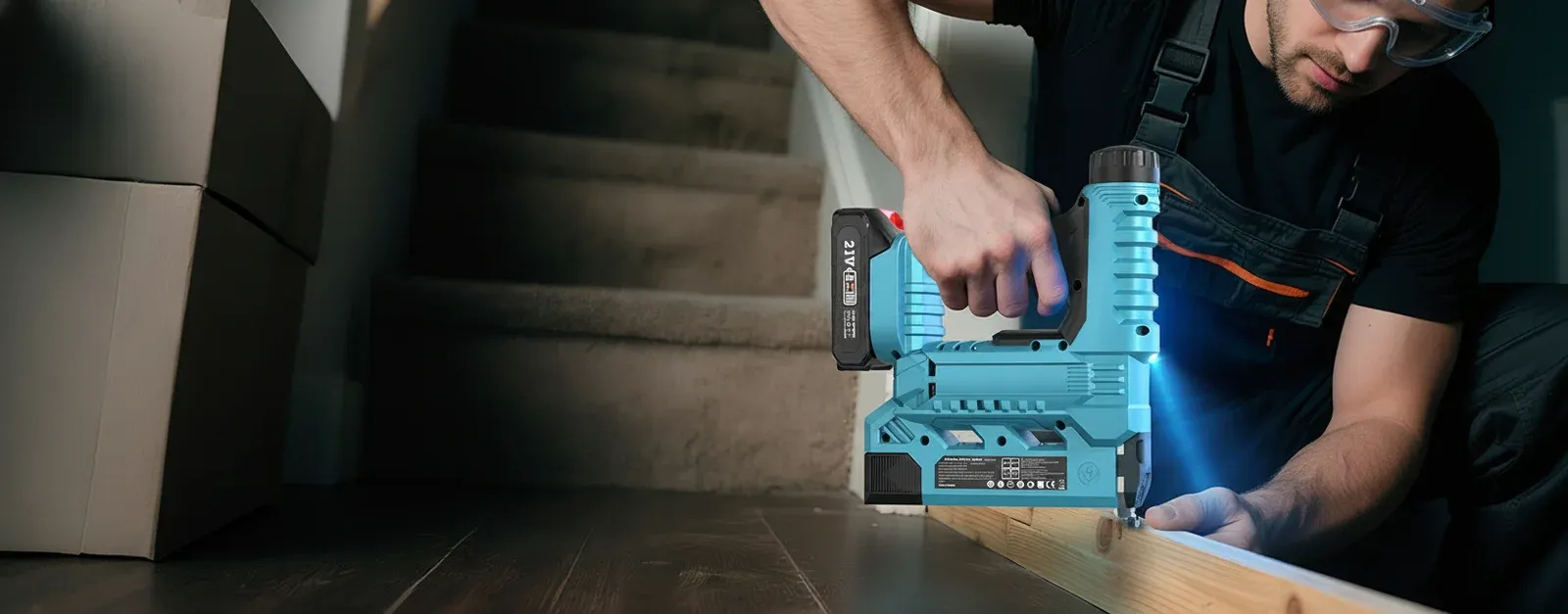
The BradNailer Cordless 18G Brad Nailer & Stapler is built for this switch between fastener types: it fires narrow crown staples from 15 to 25 mm and 18-gauge brads from 15 to 32 mm from one cordless body. It runs a 20V 2.0Ah lithium-ion battery, holds 100 fasteners, fires up to 30 shots per minute, weighs 2.65 kg and has adjustable depth so the crown pulls fabric snug without cutting. It is UKCA, CE, RoHS, WEEE and UN38.3 compliant, comes with free UK delivery, 30-day returns and a 12-month UK warranty, and costs £307.85 inc. VAT (£256.54 ex. VAT), rated 4.7 out of 5 from 271 reviews.
One tool for the frame and the fabric?
View the BradNailer 2-in-1 tool — £307.85Frequently asked questions
What crown width should I use for upholstery?
For light upholstery such as a dining-chair seat base, a narrow crown staple is usually right: it holds the fabric without a bulky bridge showing. Match the leg length to your fabric layers and frame, and test on an offcut first.
Can I use the same tool for brads and staples?
Yes, if it is a 2-in-1 tool. This one fires both 18-gauge brads from 15 to 32 mm and narrow crown staples from 15 to 25 mm, so you can switch between fixing trim and stapling fabric without carrying a second machine.
What staples fit a 20V 2-in-1 brad nailer and stapler?
This tool takes narrow crown staples from 15 to 25 mm. Beyond length, check the crown width and that the staple type suits the magazine before you buy consumables, as narrow crown staples of the same length can differ in crown and wire.
Are staples stronger than brads for furniture?
For holding fabric and thin sheet, a staple's two legs grip more surface than a single brad, so it holds better on upholstery and backing panels. For slim, visible mouldings a brad leaves a smaller, tidier hole, which is why a 2-in-1 tool is handy.
Ready to try BradNailer?
Shop Now — £307.85